

Polyurethane foam molds play a critical role in modern manufacturing, enabling the efficient production of lightweight, durable, and precisely shaped foam components. From automotive interiors to outdoor furniture and industrial equipment, these molds help manufacturers achieve consistent quality while keeping production costs under control. Understanding what a polyurethane foam mold is, how it is made, and where it is used can help businesses choose the right solution for their specific applications.
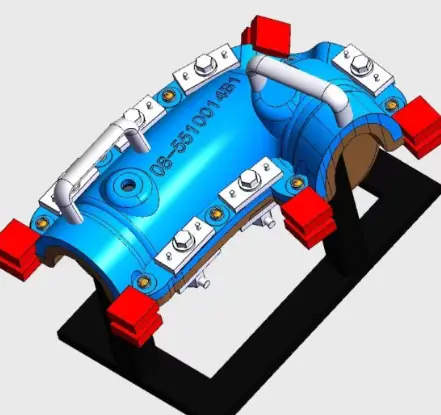
Understanding Polyurethane Foam Molds
A polyurethane foam mold is a specialized mold used to shape polyurethane (PU) foam into finished or semi-finished products. During the molding process, liquid polyurethane components are mixed and injected or poured into the mold cavity. Through a chemical reaction, the material expands, fills the mold, and cures into a solid foam structure that matches the mold’s geometry.
Unlike solid plastic molding, foam molding allows manufacturers to create parts that are lightweight yet strong, with excellent cushioning, insulation, and energy-absorbing properties. This makes polyurethane foam molds especially valuable in applications where comfort, impact resistance, or thermal performance are important.
Common Applications of Polyurethane Foam Molds
Polyurethane foam molds are widely used across multiple industries due to their versatility and adaptability.
In the automotive sector, foam molds are used to produce seats, headrests, armrests, sound insulation panels, and energy-absorbing components. These parts improve driving comfort while reducing overall vehicle weight.
In furniture and leisure products, polyurethane foam molds help create cushions, seating cores, and ergonomic components for outdoor furniture, sofas, and recreational equipment. The ability to customize foam density and shape makes them ideal for comfort-focused designs.
Industrial applications include protective padding, insulation parts, packaging inserts, and structural foam components used in machinery and equipment. These parts often require consistent quality and dimensional accuracy, which well-designed foam molds can deliver.
Polyurethane foam molds are also used in water sports and outdoor products, where lightweight construction and durability are essential. Components for kayaks, canoes, and related equipment often rely on foam structures for buoyancy, strength, and impact resistance.
Materials Used in Polyurethane Foam Molds
The performance of a polyurethane foam mold depends heavily on the materials used to manufacture the mold itself. Common mold materials include aluminum, steel, and composite materials.
Aluminum molds are widely used because they offer a good balance of strength, thermal conductivity, and weight. They allow for faster heat transfer, which helps control the foaming and curing process and improves production efficiency.
Steel molds are chosen for high-volume production or when superior durability is required. Although heavier and more expensive, steel molds can withstand long production runs with minimal wear, ensuring consistent product quality over time.
Composite and resin-based molds are often used for prototyping or low-volume production. They offer flexibility in design and lower initial costs, making them suitable for custom or short-run projects.
An experienced mold manufacturer selects materials based on production volume, foam formulation, part complexity, and cost considerations.
The Manufacturing Process of Polyurethane Foam Molds
The production of a polyurethane foam mold begins with product design and engineering. CAD modeling is used to define the part geometry, draft angles, venting, and surface finish. This stage is critical for ensuring proper foam flow, expansion, and demolding.
Once the design is finalized, the mold is manufactured through CNC machining, casting, or a combination of processes, depending on the material and complexity. High precision is essential to ensure dimensional accuracy and repeatability.
After machining, the mold undergoes surface treatment and finishing. This may include polishing, coating, or applying release-friendly surface textures to improve product appearance and extend mold life.
Finally, the mold is tested with actual polyurethane foam formulations. Trial runs help fine-tune parameters such as injection volume, expansion rate, venting, and curing time, ensuring stable and reliable mass production.
The Role of Professional Mold Manufacturers
Choosing a capable mold manufacturer is key to achieving high-quality foam products. XINGHUI MOLD, as one of China’s established rotational molding mold manufacturers, brings extensive experience in the design and manufacturing of rotational molds, vacuum forming molds, blow molds, foam molds, and complete rotomolded products.
With a broad product portfolio serving industries such as outdoor furniture, leisure equipment, water sports products, industrial tanks and containers, and automotive components, XINGHUI MOLD combines engineering expertise with advanced manufacturing capabilities. Its experience in custom mold design allows clients to achieve optimized foam structures, consistent quality, and efficient production across diverse applications.
Conclusion
A polyurethane foam mold is an essential tool for producing lightweight, durable, and high-performance foam components across a wide range of industries. By understanding its applications, mold materials, and manufacturing process, businesses can make more informed decisions when selecting mold solutions. Working with experienced manufacturers like XINGHUI MOLD ensures that foam molds are designed and built to meet exact performance, quality, and cost requirements, supporting long-term manufacturing success.
We are equipped with premium CNC centers, precision gantry mills and full-range rotomolding machines. We specialize in high-end rotomold design & fabrication, plus custom rotomolded product manufacturing.
10 Aug,2026
12 May,2026
14 Apr,2026
23 Mar,2026
 EN
EN
 AR
AR BG
BG HR
HR CS
CS DA
DA NL
NL FI
FI FR
FR DE
DE EL
EL IT
IT JA
JA KO
KO PL
PL PT
PT ES
ES SV
SV ID
ID SR
SR ET
ET HU
HU TR
TR GA
GA XH
XH